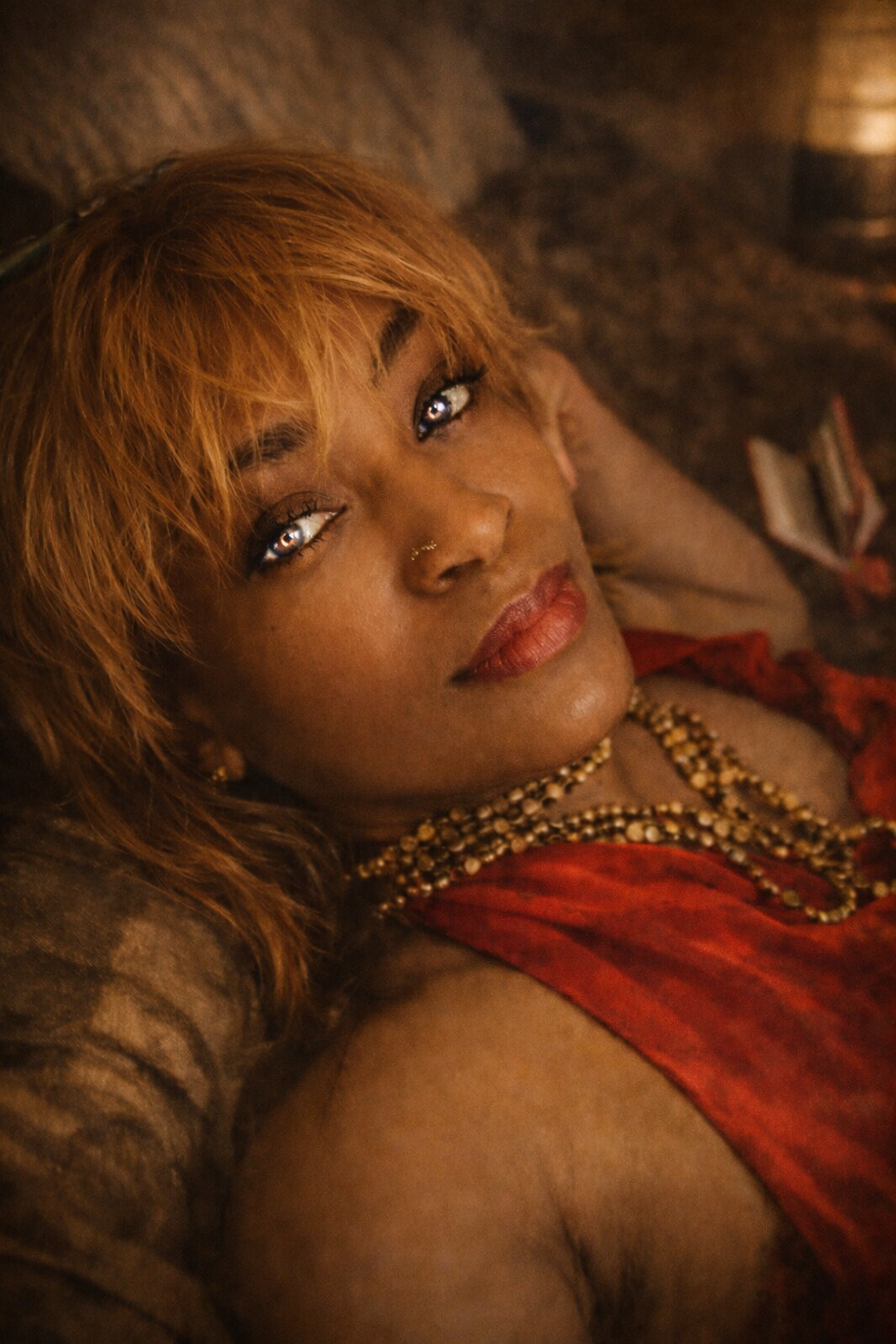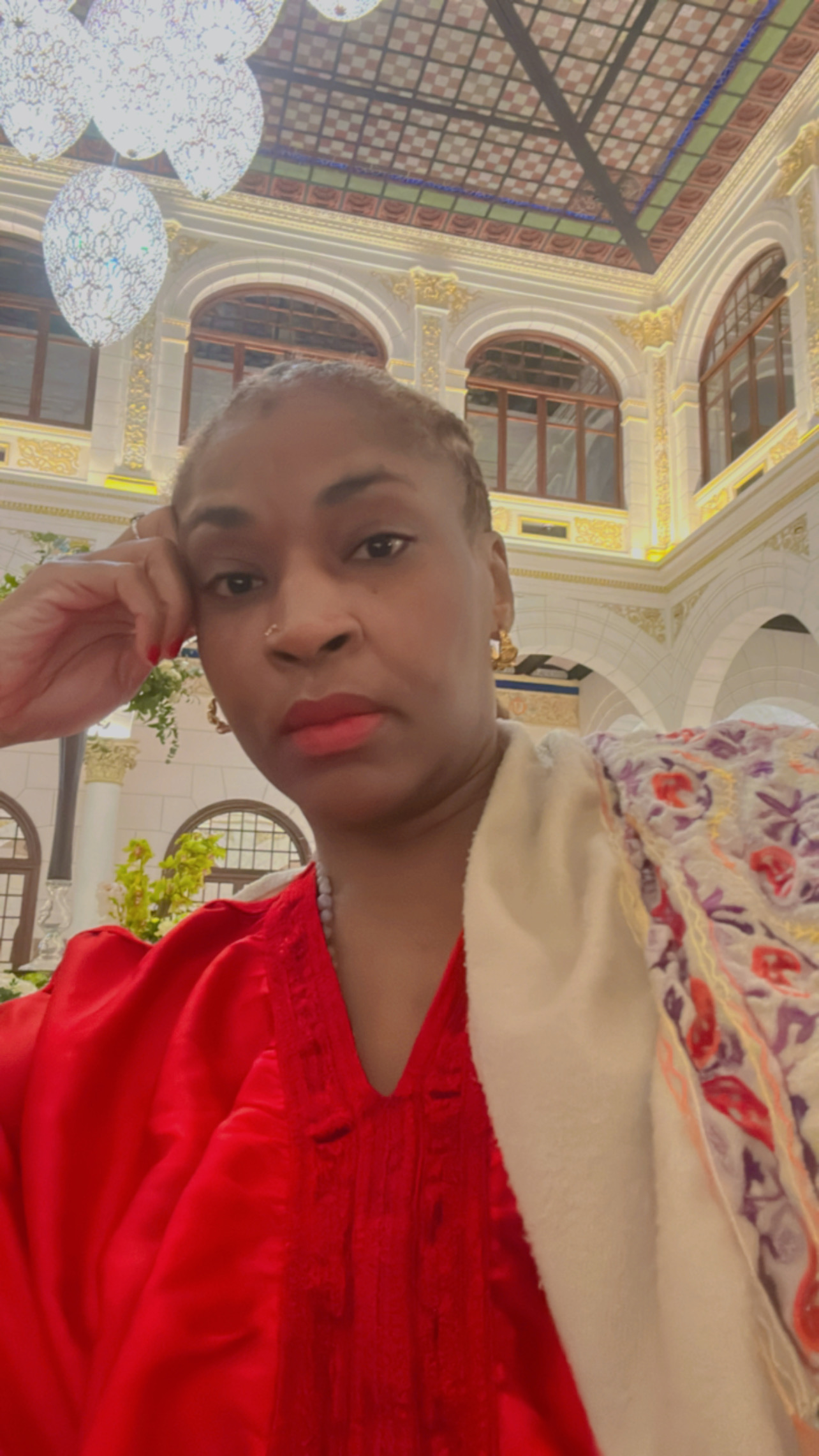
There is a bargain many of us made — quietly, practically, without ceremony. We softened the hair. Neutralized the palette. Traded the earrings that said I know exactly who I am for the ones that said I will not make this difficult for you.
We learned to arrive in rooms having already edited ourselves — not because we wanted to, but because we understood, with the particular intelligence of women who have always had to read their environment before entering it, that visibility has a cost. And that certain kinds of beauty made that cost higher.
This is the bargain. And it has been costing us more than we named.
She did not make herself smaller to be taken seriously. She made herself so fully herself that the rooms had to expand.
I think about Mickalene Thomas — her canvases enormous, rhinestone-encrusted, unapologetically Black and feminine and maximalist and serious and museum-hung and auction-record-breaking and winning. Winning the rooms. Winning the institutions. Winning on her own terms, in the full volume of her own aesthetic — not despite the beauty that those rooms once told her was too much, but precisely because of it.
She did not make herself smaller to be taken seriously. She made herself so fully herself that the rooms had to expand.
That is the argument.
Not that beauty is power in the soft sense — in the sense of pleasing, of opening doors through charm, of making yourself palatable enough to be admitted. That version of beauty is compliance dressed in good lighting. It is the beauty of permission-seeking, and it will only ever get you as far as someone else is willing to let you go.
I am talking about something harder and more honest.
The beauty that says: I have looked at what this world considers beautiful and I am expanding the definition, whether or not the room is ready.
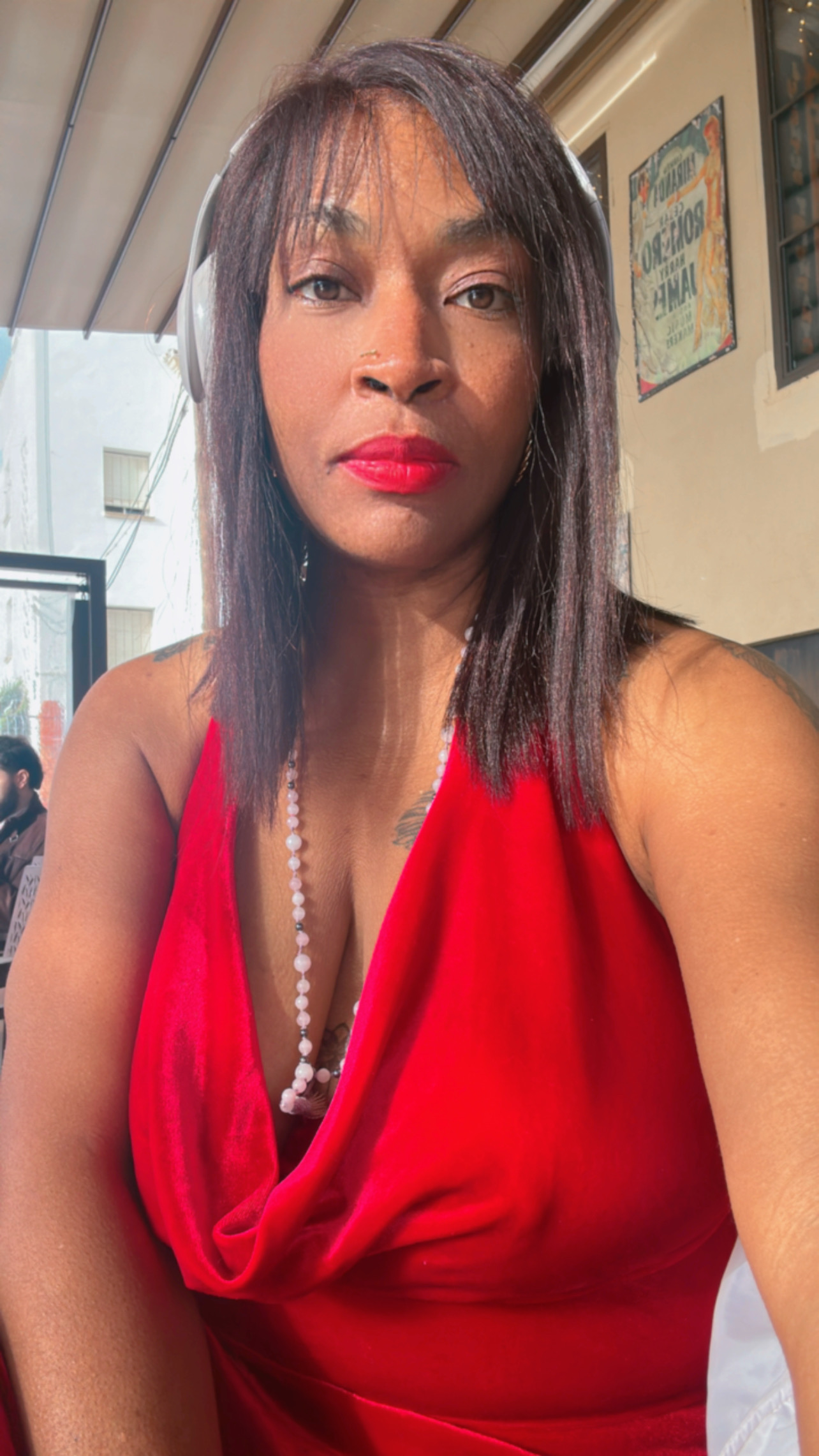
In conversation with the work of Mickalene Thomas
The beauty that carries the full weight of your lineage — your particular skin, your particular hair, your particular body, your particular way of inhabiting space — without apology and without the constant low-grade editing that passes, in professional settings, for "professionalism."
I have been in rooms where the most powerful woman present was also the most visually specific. The most herself. The least negotiated-down. And I have watched that specificity function as a kind of authority that no title could replicate — because it communicated something titles cannot:
I did not arrive here by making myself easier to digest. I arrived here whole.
The solution is not permanent self-reduction. The solution is building the kind of authority that makes the rooms restructure themselves around your presence.
That wholeness is threatening to systems built on the assumption that entry requires compromise. That belonging requires a certain degree of erasure. That the price of the room is leaving something of yourself outside the door.
Sainté refuses that architecture.
Not naively — I understand the real costs of visibility, the real calculation many women make, the real danger that certain bodies face in certain rooms when they take up too much space in the wrong way. I am not dismissing that reality. I am saying that the solution is not permanent self-reduction. The solution is building — individually and collectively — the kind of authority that makes the rooms restructure themselves around your presence rather than the other way around.
Beauty, in this sense, is not about aesthetics.
It is about the refusal to disappear.
It is about understanding that when you have spent years minimizing the most specific, most alive, most visually powerful things about yourself in pursuit of safety or money or access — you have not just lost something personal.
You have handed something over.
And the extraordinary thing — the thing Mickalene Thomas demonstrates across her entire body of work, the thing I have watched certain women do in rooms across the world — is that you can take it back.
Not loudly. Not as performance. Not as a statement that announces itself. But as a practice. As a daily, deliberate choice to show up in the full register of your own beauty — your own specific, culturally rich, historically loaded, personally hard-won beauty — and let that fullness do what compliance never could.
Open the room. Change it. Make it larger than it was before you walked in.
That is what beauty allows.
Issue One. Essay III.
— Aurèlin Sainté Lys