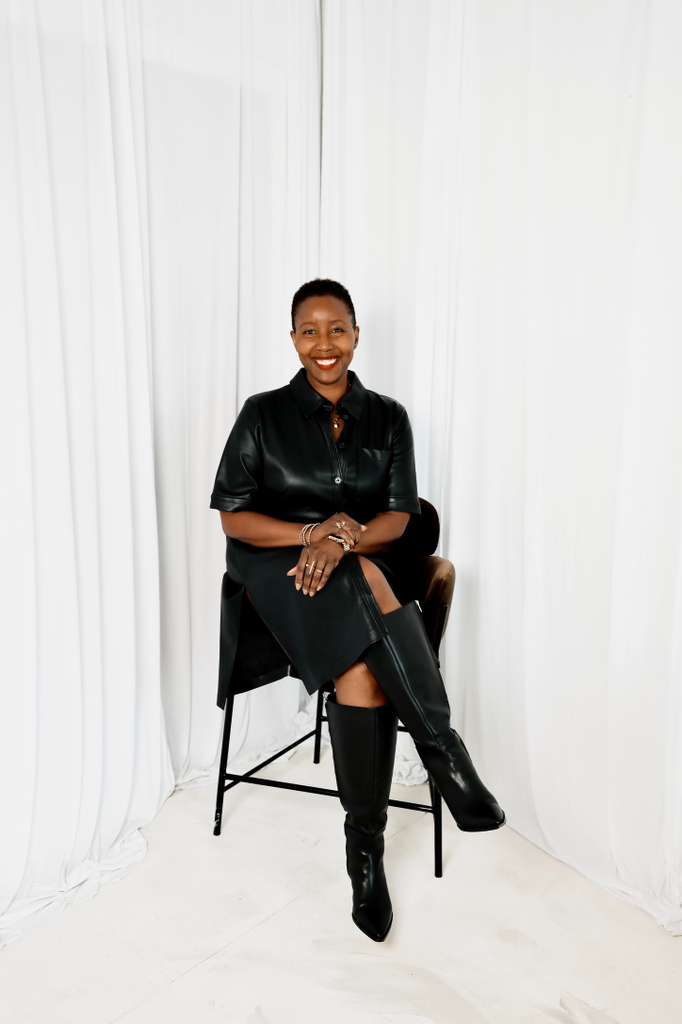
Last week my mom caught a terrible cold that had been moving through my household. I live in a multigenerational Black African American/Jamaican household which is a blessing until my 5-year-old brings home the latest incarnation of the petri dish otherwise known as TK. "The Little" was the first to go down, followed by my husband and then me. A week had passed and we all thought we were in the clear and then my mom started coughing. Throughout the early stages of the cold my mom just wouldn't let herself lay down. One minute she's doing the dishes and talking her Pastor through another issue at the church — mom is the Lay Leader — the next minute she must "snap the green beans for dinner." I kept pleading with her to go to bed, but it was as if she believed the faster she moved, the more she could run from it.
I remember feeling the same way at the beginning of my battle with it. And of course, despite my denial, the cold progressed and I got sicker and sicker until I found myself rushing down the freeway trying to get back home on Easter Sunday, doing anything I could to keep myself from nodding off while driving. It was the kind of cold that humbles you — the kind that says "you gonna lay down whether you like it or not." I got into bed and slept for the rest of that day and the following day. When I shared that story with mom she said "well I just can't stay in the bed all day" — as if to say, "like you can." Mind you she's retired, for the fourth time. The only place she has to be with a cold is in bed. But she fought.
Her resistance got me to thinking about why. What are we afraid of? Are we afraid of appearing to be weak? And what if we are? Because that fear does not begin with us. It is ancient. It was forged in a time when showing symptoms — of sickness, of pain, of need — meant punishment. When you could be beaten for not making a quota they wouldn't give a donkey. Our ancestors did not have the luxury of laying down. So they developed remedies. Passed down cures for sickness that could soothe the symptoms just enough to keep going. Not to heal. To continue. That is not magic and it's not wonder. It is survival under duress. And we have been confusing needing rest with laziness, and survival with strength, ever since.
"Resilience is not a gift. It is a response to a wound."
Nataki GarrettMy daughter has this book about Juneteenth she loves me to read repeatedly. Lately she has a lot of questions about slavery. She also has a book about Henry "Box" Brown — the man who freed himself from enslavement by mailing himself up north to free Philadelphia. I don't mind her questions. I have also always had a lot of questions about my ancestors' experience of enslavement. I know that our survival reflects our will and knowing it doesn't mitigate the harm or trauma. And we are a resilient people, proven by our present existence. But resilience is not a gift. It is a response to a wound. Which means every generation that produces it has first had to absorb the harm that makes it necessary. We pass that down too. Sometimes we pass it down without being fully aware of what we are passing down.
I had come outside during my own convalescence to get some sun and wait for my tea to steep before returning to bed. My five-year-old found me immediately. She wanted me to watch her on the trampoline. To play with her. To tend to an imaginary but very real to her boo boo — the way children do when they lack the words to express their fears and are far too self-centered (and rightfully so) to know how to give space to their mother. My mom called her a nuisance. She meant it as protection. She was trying to guard my rest. But what she was also doing, without knowing it, without meaning it — she was teaching my daughter the same lesson that had been taught to her. That need is inconvenient. That asking for care regardless of whether your mommy is depleted is a nuisance. That the correct response to your own fear and longing is to make yourself smaller so that the people around you can keep going.
I immediately corrected the harm the best I could: "No, you are not and never will be a nuisance, Joybird... This old cold is the real nuisance! But mommy cannot watch you right now, I have to rest... Okay?" She agreed, albeit reluctantly. Later she was allowed to bring me a glass of water and some soda crackers — and being helpful to me while I was sick made her day.
And that passage from The Bluest Eye enters my mind. The part when young Claudia MacTeer lies sick in bed and learns from the texture of her mother's voice that her becoming ill is a kind of failure — a weakness to be despised. That the anger directed at the sickness and the anger directed at the child are indistinguishable. Claudia resolves, as children do when they absorb what they were never meant to hear, that she will refuse to get sick. That she will not give the sickness the satisfaction. That lesson does not stay in childhood.
I remember very early in my own tenure, just before COVID, catching what felt then like the worst cold of my life. I was at home, sick in bed for a few days, before my board chair texted to see if I could hop on a call. She knew I was sick. I made sure that she knew. I was naive enough to believe that the reaction would be humane. I was terribly wrong. Apparently, somebody had reported to her that I hadn't been able to make a couple of meetings. Mind you, by the winter of my first year running a $44 million, 85-year-old Shakespearean Theater, I had already worked all the way through the holidays. It was normal for me to answer 35 emails a day, which put me about twenty behind every day. But this cold really laid me out.
She got on the phone and told me that several members of the board were now nervous about my ability to lead the organization. Because I was sick. One of them had asked if I had the physical stamina for leadership. I said: well, I just have a cold. She said: I know. I'm just relaying the message. It was like being hit with a blunt machete. It's not as sharp so it shouldn't cut as deep, right? Because the lesson had already been delivered long before she picked up the phone. It was delivered in my grandmother's kitchen. In my mother's refusal to lay down. In the yard where my daughter was called a nuisance for needing me. The board chair did not invent the expectation. She simply confirmed it.
"That our bodies are not allowed to be inconvenient. That need is weakness. That weakness invites contempt."
Nataki GarrettI've said it before and I'll say it again: resilience requires harm. We cannot show the symptoms of trauma so we swallow them and hope that disappearing the truth will eliminate the harm. We handle these moments, we stomach them, and then they become this normalized lull of our lives. And after experiencing it over and over we stop naming it. We forget it's trauma. We store it in our cells. As Black women there is an expectation that we are used to trauma. I had a white girlfriend once tell me "but you are so strong, much stronger than me." And I responded: "Oh — that's why I'm in my forties with a goiter, unexplained edema and prediabetes. It must be the strength." She meant it as a compliment. She can and must miss me with that.
We have been performing being trauma-free for so long that we have forgotten what it feels like to put it down. We have confused endurance with healing. We have called survival strength and let that be enough. It is not enough.
My mother fought that cold for days before she finally laid down. She thought movement was protection. She thought if she just kept going she could outrun it. She could not. But here is what I also know: we have to unlearn and begin accepting that it is OK to not be OK. That rest is not a sin. That our wellbeing is not a nuisance. That laying down is not surrender.
Rather, it is the most radical act of self-determination available to a Black woman who has been taught since birth that her body exists in service of everyone else's comfort. We have to learn to put ourselves to bed. And while we are there we have to remember that our ancestors' survival paid for our peace in advance. They kept going then by force and we can stop now by grace. Not forever. Just long enough to heal. The least we can do is accept the inheritance.
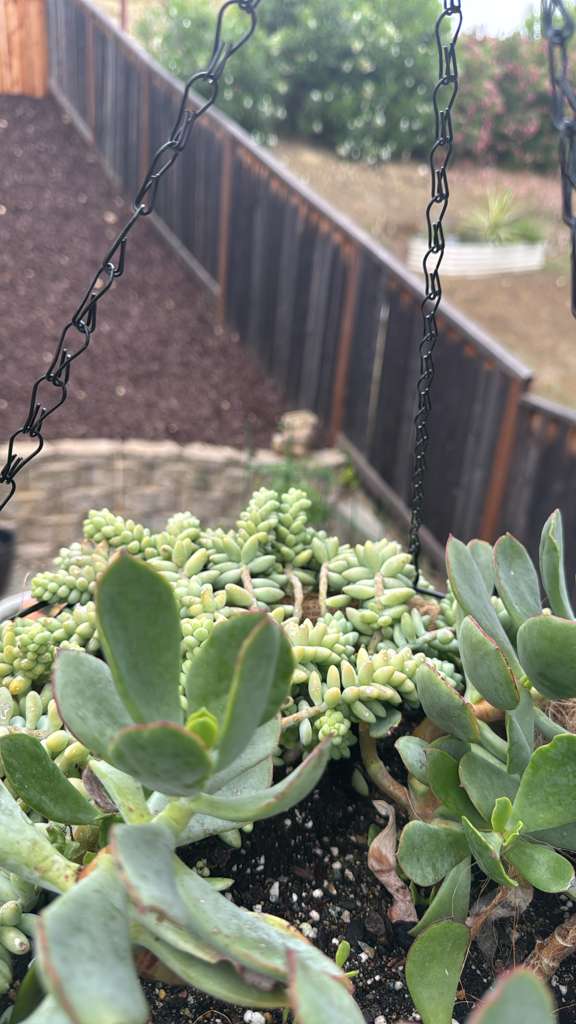
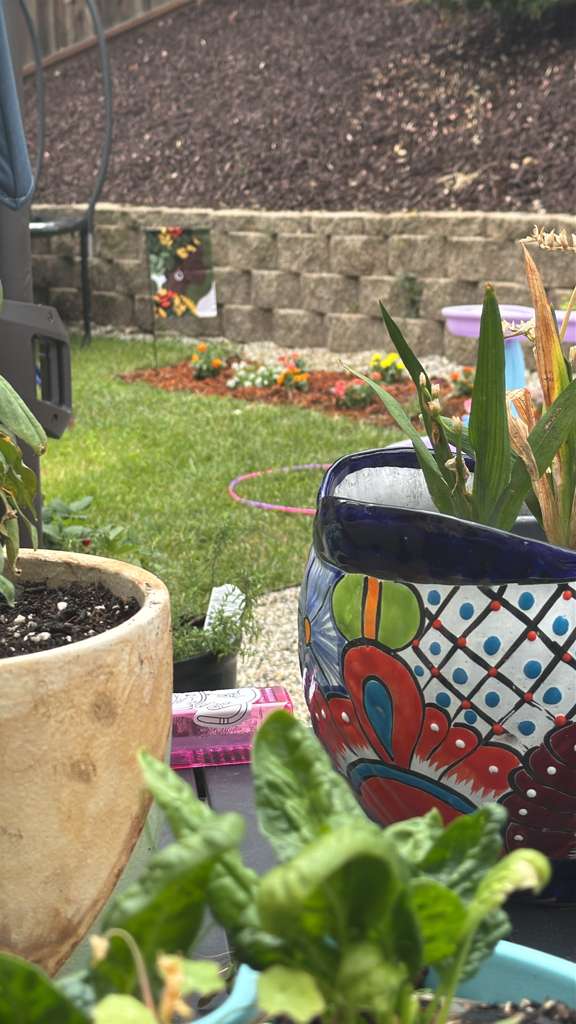
Photographs courtesy of Nataki Garrett Myers
So reset your social media. Type the word butterfly into the search. Type laughing babies. Type sunflowers. Let the algorithm show you something that does not require you to be strong. I spent my time in bed healing from that cold watching videos about planting tomatoes and why mulch is needed and how to plant and care for zinnias. I put my feet on the grass when I could. I let the earth hold me for a minute. It did not ask me to perform. It did not relay any messages.
Touch the earth. Put your feet on grass. Breathe into the parts of yourself that are hurting and let them be hurting without calling them a nuisance. Accept you for you. And forgive your mom for calling your blessing of a child a nuisance. Teach your child to forgive her Grammie too. Because she was just passing down the only thing she knew how to give — the armor she had worn her whole life, offered as love. It was love. It was also harm. Both things are true.
Be here now.