We conflated two things. And the confusion has been expensive. Somewhere in the last decade, visibility became the currency. The platform. The follower count. The speaking slot. The being-known.
And women — particularly women who had spent generations being made invisible inside systems that benefited from their absence — understandably ran toward it. Visibility felt like arrival. Like proof. Like finally being counted in a ledger that had historically excluded you.
I understand that impulse completely. I have felt it myself.
But I have also sat in enough rooms to know that visibility and power are not the same thing. And confusing them — building an entire strategy around being seen without first understanding what you are building toward — is one of the most common and quietly devastating mistakes I watch talented women make.
Visibility is exposure. Power is leverage.
Visibility is being in the room. Power is determining what happens inside it.
Visibility is being known. Power is being the one whose knowing changes things.
These are not the same. And the gap between them is where a great deal of energy gets lost.
I have watched women build enormous platforms and still feel, privately, that nothing is shifting. That the visibility is real but the influence is thin. That they are being applauded in spaces that are not actually being changed by their presence. That they have become, in some precise and uncomfortable way, decorative to systems they intended to disrupt.
This is not failure. It is a navigation error. And it is correctable.
The women whose presence altered the direction of rooms shared something that had nothing to do with platform size. They understood the difference between being seen and being felt.
Being seen is surface. Being felt is structural. It is the difference between a room acknowledging your presence and a room reorganizing itself because of it. Between being invited to speak and being the reason the conversation changed. Between occupying a seat at the table and quietly rewriting what the table is for.
That kind of power does not always announce itself. In fact, the most sophisticated versions of it are deliberately quiet. They operate through relationship, through timing, through the patient accumulation of trust and information and positioning that most visibility strategies have no patience for.
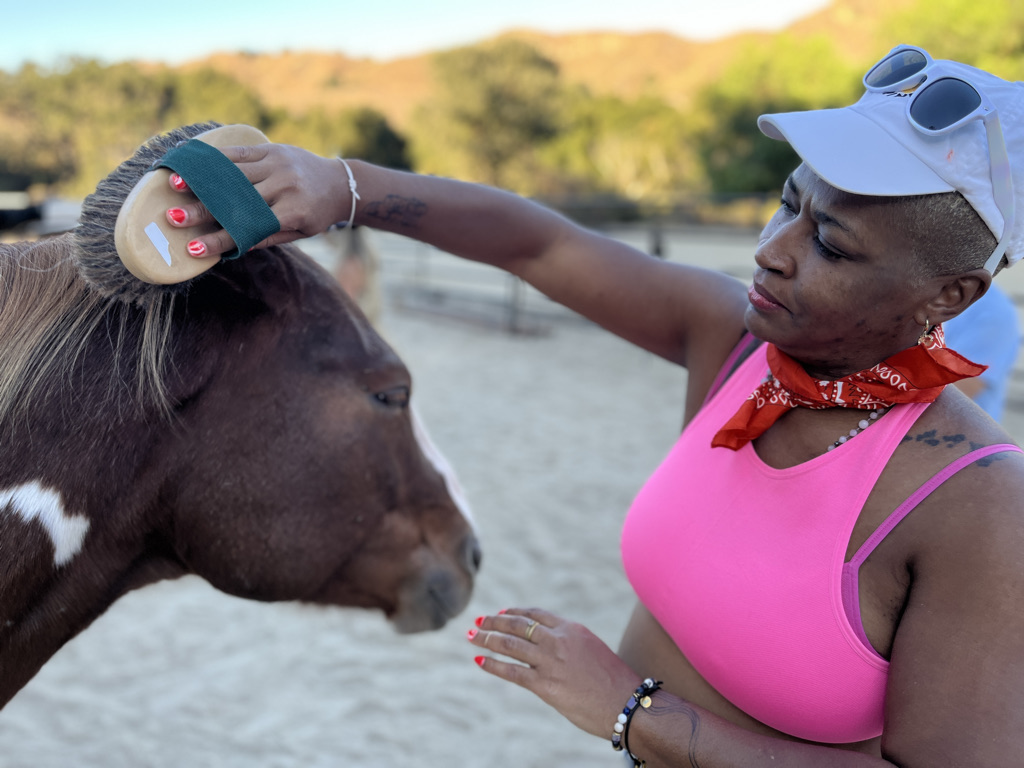
Presence without performance — attunement as power
I think of the women I have known who moved entire institutions without ever being the most visible person in the room. Who built influence so structural, so woven into the fabric of how things operated, that removing them would have required rebuilding from the foundation. Who understood that true power is not performed for an audience — it is exercised in the specific, often private moments when decisions are actually made.
None of them had the largest following. All of them had the deepest roots.
This is not an argument against visibility. Visibility matters. Representation matters. Being seen — particularly for women whose bodies and voices have been systematically excluded from public space — is not trivial. Do not mistake this essay for a dismissal of that reality.
This is an argument for precision.
For understanding that visibility is a tool, not a destination. That it serves power when it is deployed strategically — when it opens rooms, builds trust, attracts resources, and creates the conditions for actual influence. And that when visibility becomes the goal itself, something gets inverted. You begin performing for the audience instead of building toward the outcome. You optimize for being known instead of for mattering.
The question is not: how do I become more visible? It is: visible to whom, for what purpose, in service of which specific outcome?
And underneath that, the harder question:
What kind of power am I actually building — and is my visibility strategy serving it, or replacing it?
Because the most powerful women I know are not the most visible ones. They are the ones who know exactly when to be seen — and exactly when to let the room underestimate them.
That second skill is the rarer one. And it is worth everything.
Issue One. Essay IV.
— Aurèlin Sainté Lys