The corporate world has long underestimated women and the roles we play in shaping its culture. Influence doesn't always come from titles or tenure — often, it emerges in quieter, more unexpected ways.
There is a certain power in surprising those who make assumptions, especially when someone has already decided certain things about you before you've had the chance to show them. For me, one of the most surprising tools in that process was whiskey.
I never imagined that my appreciation for whiskey would become an asset as I built my career and expanded my network across the US. In my early twenties, I bartended in Washington, D.C., where I learned far more than how to mix drinks. I developed a curiosity for spirits — their origins, their variations, and the subtle differences that shape their character. Whiskey, and more specifically bourbon, became my drink of choice. Not because of the image often associated with it — noir sophistication or performative refinement — but because I genuinely loved the taste and the experience of discovering something new in every pour.
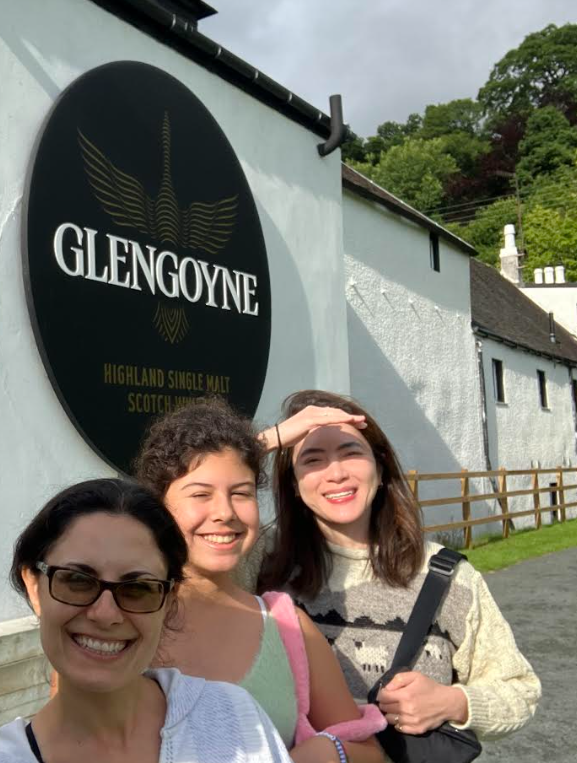

Scotland, Distillery Tour · Photographs courtesy of the author
Behind the bar, I picked up the fundamentals: all bourbon is whiskey, but not all whiskey is bourbon. That simple distinction opened the door to a deeper exploration. I began to notice the contrasts between bourbon, rye, Scotch, and Irish whiskey — the sweetness of bourbons, the spice of rye, the smoky depth of Scotch, the lighter, smoother profile of Irish blends. This wasn't knowledge I pursued for anyone else; it was something I cultivated purely for myself.
Over time, I learned my preferences: bourbon remained my favorite, while Irish whiskey ranked lower — though I'll admit, that opinion softened during a trip to Dublin, where evenings spent with Tullamore and Redbreast were as much about connection as they were about taste. Then followed my road trip around Scotland, where my brother and I toured distilleries and tried different variations, where I learned that Scotch was indeed my second favorite after bourbon.
"Whiskey, unexpectedly, became more than a preference. It became a bridge."
Kate KleymanWhen I transitioned into New York's financial services world, my priorities were straightforward: prove myself through my work, advance steadily, and create stability as a single mother. Networking, at first, felt secondary — a necessary but often time-consuming extension of the job. But I quickly realized that in these spaces, the smallest details were observed, including what you ordered at the bar.
My drink of choice — bourbon neat or an Old Fashioned — was never strategic. It was simply what I enjoyed. Yet it consistently sparked curiosity. Colleagues and clients would ask how I developed a taste for whiskey, sometimes with genuine interest, other times with thinly veiled skepticism. Did I actually know what I was drinking? Was it a preference or a performance?
Those questions became openings.
What began as casual exchanges about flavor profiles or distilleries often evolved into deeper conversations — about travel, about risk-taking, about personal taste and identity. In an environment where many interactions felt rehearsed, these moments stood out. They were authentic, unscripted, and memorable. Over time, those conversations led to invitations to dinners, events, introductions that might not have happened otherwise.
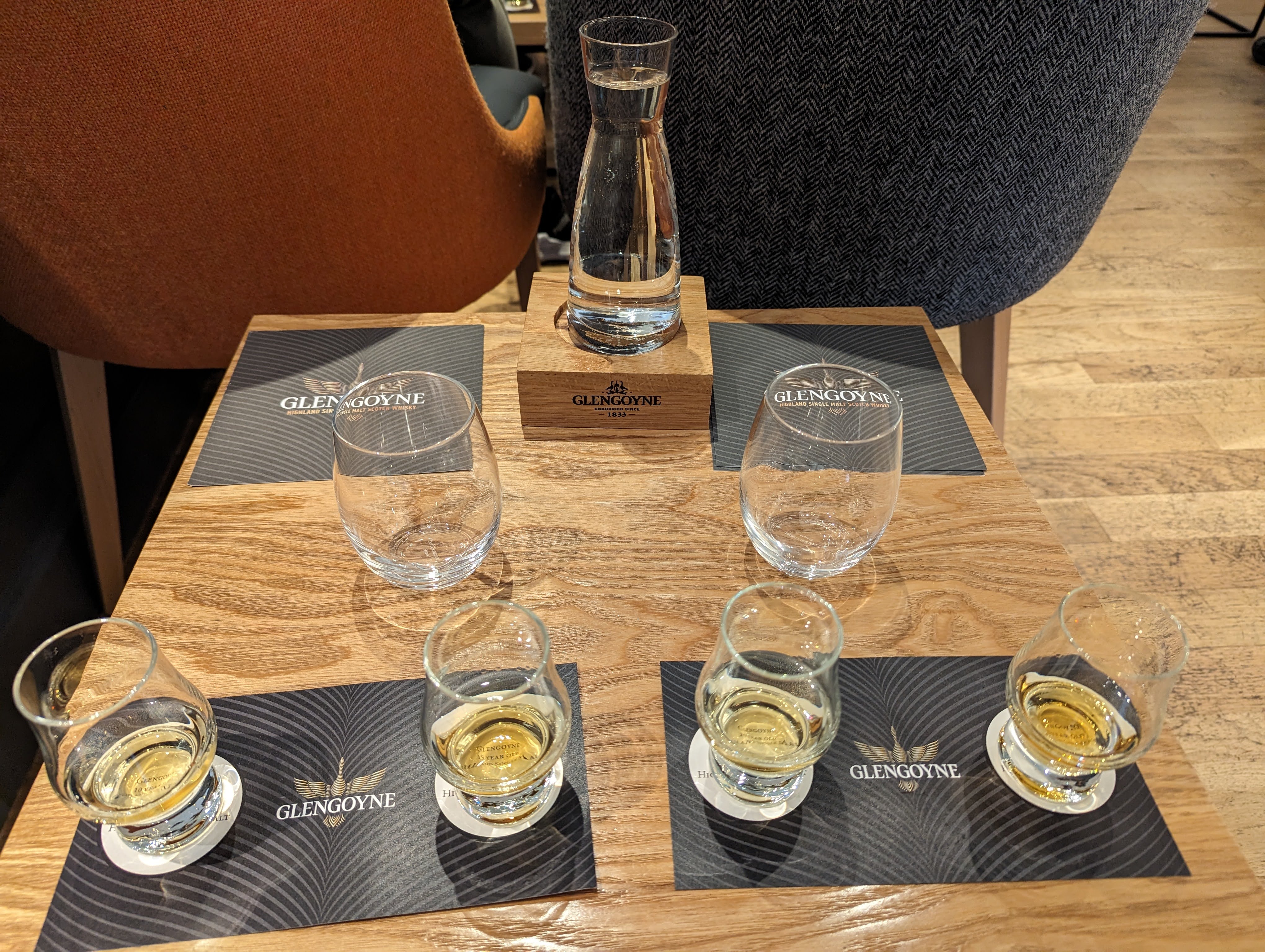
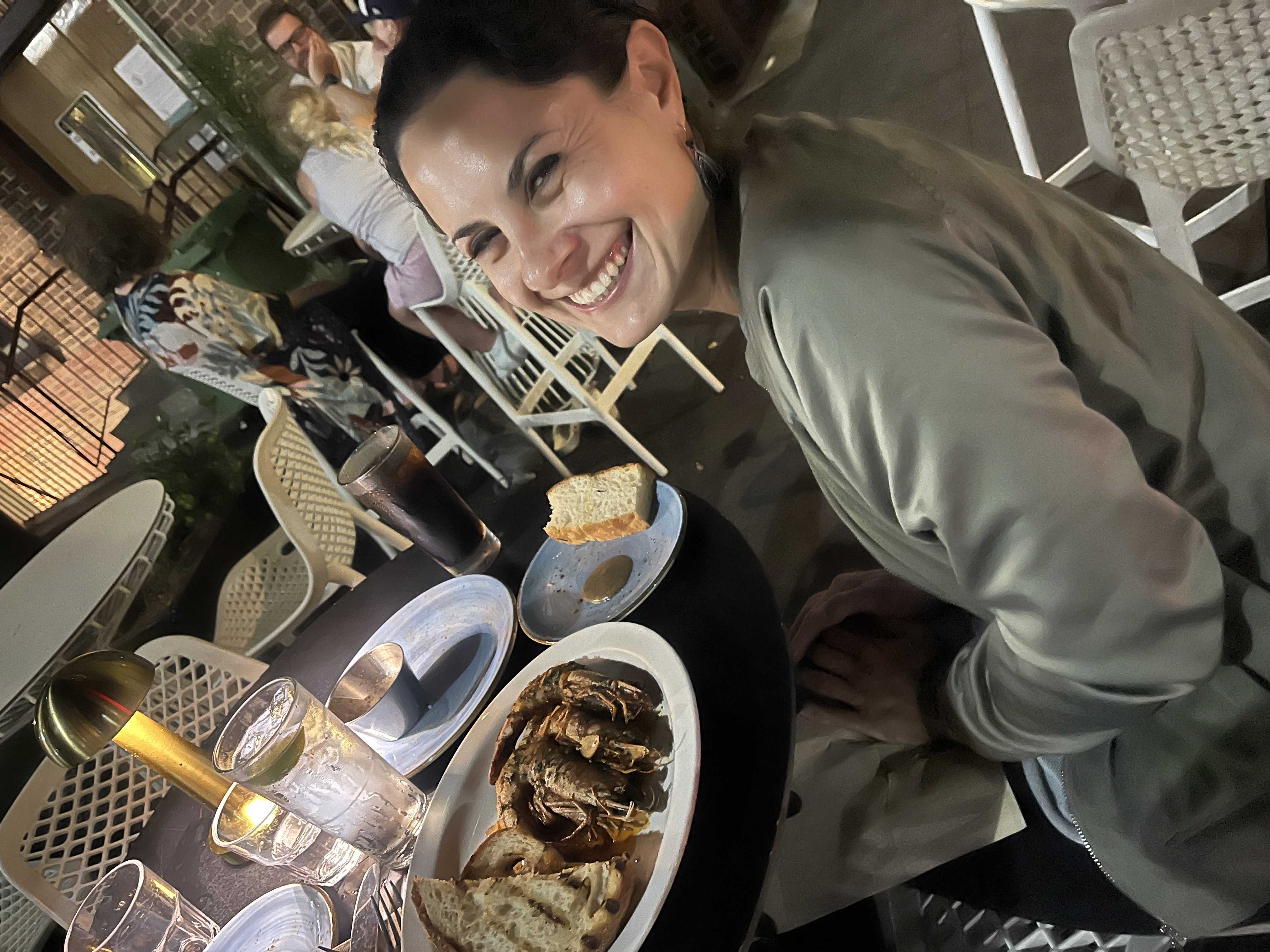
Dublin & Kentucky · On the road between pours
It allowed me to challenge assumptions without confrontation, to create connection without force, and to occupy space in rooms where I was not always expected to belong. In a world that often tries to define you before you speak, sometimes all it takes is ordering exactly what you want — and knowing why — to change the conversation.
Today, I send those that I know who share my love of bourbon a bottle of their favorite brand. And which bourbon is in my cabinet at home? Bullet — not the most expensive or luxurious brand, but then again, my drink choices were always for me.