Refuse the Beige — Sainté Magazine
Essay Issue 03 · Yield · September 2026

Refuse the Beige

Depth was never a luxury add-on to the thing. It was always the thing. Everything else was packaging.

There was a hallway light left on in a rental in Marbella, Spain, and no note explaining where the switch was. Small thing. The kind of small thing that used to come with a person attached to it — someone who'd walked the space enough times to know it confused first-time guests, and who'd left a card, or better, waited up to say so themselves. Instead there was an app, a code, a cleaning schedule I could see but never meet. The apartment was fine. It was also nobody's.

I trained as a dancer before I did anything else — Graham technique, then Ailey, years of a body learning to hold shape and breath and intention at once, for no reward beyond the shape itself. That kind of practice teaches you something most professions don't have time to teach: presence isn't a mood. It's a discipline, built slowly, mostly in private, mostly without applause. You learn to feel when someone else has done that work too — when a driver's care for your bags to the door is trained rather than performed, when a host's attention to a room comes from years of understanding what makes a stranger feel expected rather than processed. And you learn, just as fast, to feel its absence. Not as inconvenience. As a kind of quiet abandonment.

That absence has a shape now, and it's spreading. The platforms that promised to democratize hospitality — a driver who treats you like a guest, a host who treats you like family — have optimized instead for scale, and scale has no mechanism for care. It only has mechanisms for compliance. A five-star rating measures whether nothing went wrong. It has no language for whether anyone, anywhere in the transaction, was actually attending to you.

But some of this isn't the platforms. Some of it is us. I have shared space with people who leave a bathroom without washing their hands, who treat their own hair left on someone else's floor as an acceptable inheritance for whoever comes next — not out of malice, usually, but because their attention never widened past themselves. That's not a hygiene lapse. It's a practice lapse. Somewhere along the way, an entire generation stopped being trained in the actual discipline of being in community — the daily, unglamorous work of asking how do I leave this better than I found it, because someone else is coming after me, because we are, in fact, sharing this. I don't think the sharing economy is finished. I think the muscle it depends on — the willingness to hold a stranger's experience as continuous with your own — atrophied faster than the apps that were supposed to house it.

And here is the part that surprised me, watching it happen across categories at once: consolidation doesn't just flatten quality. It forks it. Airbnb went beige — the same white walls, the same rattan, the same three-word gallery print, city after city — not by accident but by design logic. A neutral room photographs consistently, offends no one, and can be furnished identically by a management company that has never stood inside it. Convenience gets sold back to us as calm, and enough of us, overstimulated already, accept the trade without noticing what we surrendered for it.

"A neutral room offends no one, and can be furnished identically by a management company that has never stood inside it."

This isn't a new story, and it isn't unique to platforms built in the last twenty years. Fast food ran the same experiment seventy years earlier, at even greater scale. The McDonald brothers built something genuinely revolutionary in San Bernardino — the Speedee Service System, a spotless fifteen-item menu, food in your hands in under a minute, a level of quality nobody in that price category had managed before. Ray Kroc saw it, licensed it, and by 1961 had bought the brothers out entirely, over a royalty arrangement they'd been promised and never received. What Kroc built next wasn't lesser. It was, for its era, its own kind of genius: a burger with a specified fat content, a bun of a specified diameter, the conviction that a customer in Cedar Rapids deserved the identical experience of a customer in Chicago. That was the shrewd, unsentimental move of his generation — not a decline in ambition, but a redirection of it, from quality as craft toward quality as consistency, because consistency, not craft, was the thing that could cross a continent.

Seventy years on, even that institution is groping its way back toward specificity. A McDonald's in Tokyo serves a teriyaki burger and shrimp filets you won't find in Ohio. A McDonald's in Paris calls itself a restaurant, not a drive-through, and behaves like one. Whether the beef is sourced with the same care country to country is a separate, murkier question — but the instinct to differentiate by place has come back, even inside the most standardized company that has ever existed. If a seventy-year-old hamburger chain can find its way partway back to specificity, then the fork we're describing in hospitality — and, I'd argue, in coaching and therapy — isn't a permanent condition. It's a phase. The one scale runs through on its way to either maturing into insight or calcifying into formula for good.

I want to be careful here, though, because I don't think scale itself is the villain of this story. Aman — and the handful of houses built on the same conviction — skipped that seventy-year detour entirely. Growth is possible without becoming interchangeable, if what's scaling is insight rather than template. Every Aman property reads the land, the light, the particular weather and culture of where it's sitting, before it decides what it wants to be. Dozens of properties, dozens of distinct answers to the same question, all recognizably issued from one coherent philosophy without ever repeating the same room. That takes more, not less — more perspective, more taste, more willingness to actually look at a place before furnishing it. It's the difference between a formula and a practice. A formula can be copied by anyone with a supply chain. A practice has to be re-earned, on-site, every time — which is exactly why it resists the kind of automation that turns rattan and gallery prints identical across a thousand units.

A formula can be copied by anyone with a supply chain. A practice has to be re-earned, on-site, every time.

I keep the proof of this close, because it is easy to lose faith that scale and specificity can share a body. They can. I have watched a handful of houses grow — some of them enormously, into the kind of reach that usually guarantees the beige — and refuse it anyway, because what they scaled was a point of view rather than a template.

The Ones Who Refused

What follows are four of them. Not because they are small — three of the four are anything but — but because each one carried a specific, unrepeatable intelligence into rooms that reward sameness, and declined the reward.
Specificity at Scale

Four houses that grew — some of them enormously — and refused to go beige, because what scaled was a point of view.

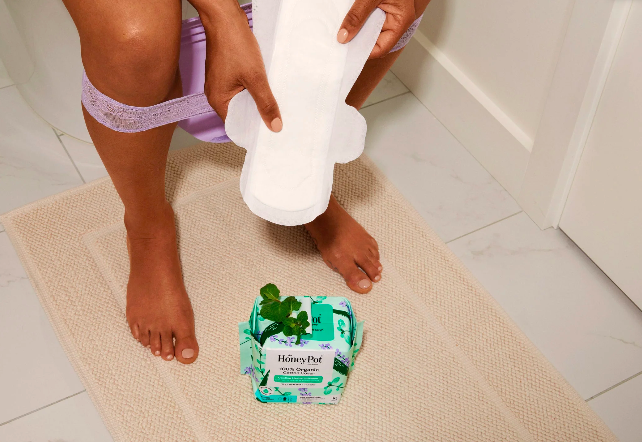
The Honey Pot Company — Cooling Herbal Infused Liners

Beauty & The Body

The Honey Pot Company

United States

A feminine-care line that walked into a category built to erase the bodies it now centers — and scaled into national retail without softening whose body it was for. The beige version would have sold "clean" and "gentle" to everyone. Honey Pot sold specificity, and let the market widen to meet it.

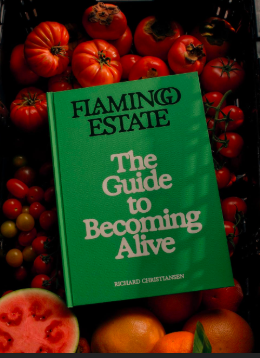
Flamingo Estate — The Guide to Becoming Alive

The Sensory Table

Flamingo Estate

Los Angeles

Luxury goods that insist on provenance and sensation where the category would happily sell you an unscented candle and a story. Everything traces to a garden, a grower, an actual place. It is the Aman argument in a jar of honey — growth by insight, never by template.

Fishwife — California White Sturgeon Caviar

The Everyday Commodity

Fishwife

United States

Tinned fish is the most standardized thing on a shelf — the beige of the pantry. Fishwife made it singular through voice, design, and an unmistakable point of view, and proved that even a commodity can refuse the average without pricing itself out of a kitchen.

Wales Bonner

Fashion & Culture

Wales Bonner

London

The clearest proof of all: a diasporic vision — Caribbean, London, the whole Black Atlantic — carried into the most mass-market rooms fashion has, and never once flattened to fit them. When the work reaches global scale and the collaborations sell out on sight, it is precisely because the point of view did not dilute on the way up. Scale amplified the specificity instead of erasing it.

Grace Wales Bonner
Grace Wales Bonner — the point of view did not dilute on the way up

I keep returning to this because I don't think it's really a story about apps, or burgers, or even four houses that got it right. I think it's a story about what happens to care — and to growth — when either is asked to scale by formula instead of by insight, and I think we're about to watch it happen again, faster than fast food ever moved, in rooms that matter far more than a rental unit. Therapy and coaching sold themselves on the opposite premise of Uber and Airbnb: not convenience, but presence. Not throughput, but depth. And the same fork is opening beneath them. Matching apps optimized for time-to-booking instead of fit. Certifications that produce volume instead of years. Session caps and manualized frameworks turning a relationship — the single variable the research keeps insisting matters most — into something assigned by formula rather than found through practice.

A dirty rental disappoints you. A practitioner without depth can do something closer to harm, because the thing being offered isn't a service you consume and leave — it's your own becoming, handed temporarily into someone else's keeping. And unlike a room, that kind of depth cannot be bought back later at a higher price point. Money restores marble counters. It does not restore a practitioner's own inner work, their years of unrewarded practice, their capacity to actually be with you in the room. That has to have been built already, slowly, the way a dancer builds a body that can hold a shape without announcing the effort it took to get there.

I think this is why AI has started to feel like urgent territory to me, faster than I expected it to. We're watching the same fork try to open before the technology has even finished forming — decades of fast food's slow drift toward standardization, then its slower drift back, compressed into a handful of years. Some of that is just how new technology reaches a market: the fastest path to distribution is usually the most averaged, most defensible, most quickly monetizable version of a thing, and "democratizing" access has quietly come to mean making one version available to everyone rather than making many versions possible. We have not yet arrived at a mature, nuanced understanding that everything doesn't have to be the same in order to be accessible — that scale and sameness are habits of this particular economic moment, not laws of physics. The real question, the one I don't think anyone has fully answered yet, is how we produce quality within the resources actually available, at the speed this is moving, without importing all the extractive, corner-cutting habits we've been trained to think business requires. It feels like a Christmas-morning kind of moment right now — something has clearly been handed to us, the wrapping still half off, and nobody yet fully knows what we've actually been given. That is exactly the moment a fork gets decided, usually by whoever moves first and hardest, not by whoever thinks longest about what's actually being built. I would like us — those of us with any hand at all in shaping how this gets used — to be among the ones who think first.

I don't think the sharing economy is all the way out, and I don't think it needs to be. What's missing isn't the concept. It's the rigor — the practice of actually being in community that the concept always depended on and never trained anyone to hold. There are newer sharing communities forming now, some of them explicitly centered on mindfulness, with a stated value for what it means to be in service to one another rather than merely adjacent to one another. Whether that ethic survives contact with scale and economy is a real question, and an open one. I don't know the answer yet. I find myself hoping it's different this time, and watching closely to see if hope is warranted.

So this is not, in the end, an essay of complaint. It's an observation about where the harvest still comes in full — and where it's thinning, and why, and what's already being asked of us again, right now, before the next thing finishes calcifying. Consolidation will keep pushing every field toward the same fork: sameness by formula, or specificity that costs more, asks more of us, and means more. The work, for those of us still practicing anything — hosting, healing, leading, dancing, building the next thing before it decides what it wants to be — is to refuse the beige. Not out of purity. Out of accuracy. Because depth was never a luxury add-on to the thing. It was always the thing. Everything else was packaging.

What we yield to, we eventually become. Choose the harvest you actually want to eat from —

and remember someone has to keep tending it.

· · ·

Editor · Sainté Magazine

Aurèlin Sainté Lys

Aurèlin Sainté Lys is an advisor, salonnière, writer, and curator, and the editor of Sainté Magazine. A former professional dancer, she is a certified somatic coach and bodyworker, and the founder of Salt & Honey Group and Sainté Lys Company.

Issue 03  ·  Yield  ·  September 2026  ·  saintelys.co