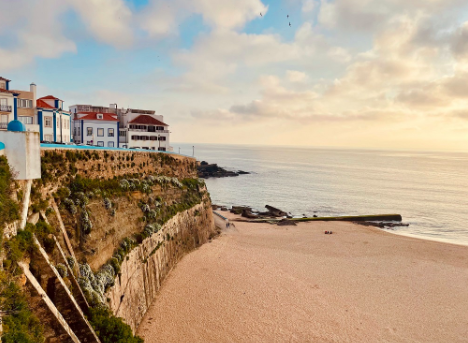
Getting to Portugal from southern Spain is not a long trip. Two hours by air; a few by bus or train. Simple. And yet the two places feel worlds apart the moment you are standing in either one.
I loved certain small moments in Spain. There was a bistro in Málaga I would frequent — La Fontaine, one of the more magical places in the city, run by a beautiful couple, a Spaniard and a Frenchman. Over the tea they poured I learned about wine, and over the wine we talked about the intersections of European identity, and what it meant to be an American moving through Western Europe. We talked about art and structure and hospitality. There were nights we ended up laughing long past the hour the restaurant was meant to close. I made friends there. I brought friends there. Not everywhere in the city felt like that — some places were touristic, some merely fantastic, like the restaurant in the centre dressed up as a train — but La Fontaine was its own kind of enchantment.
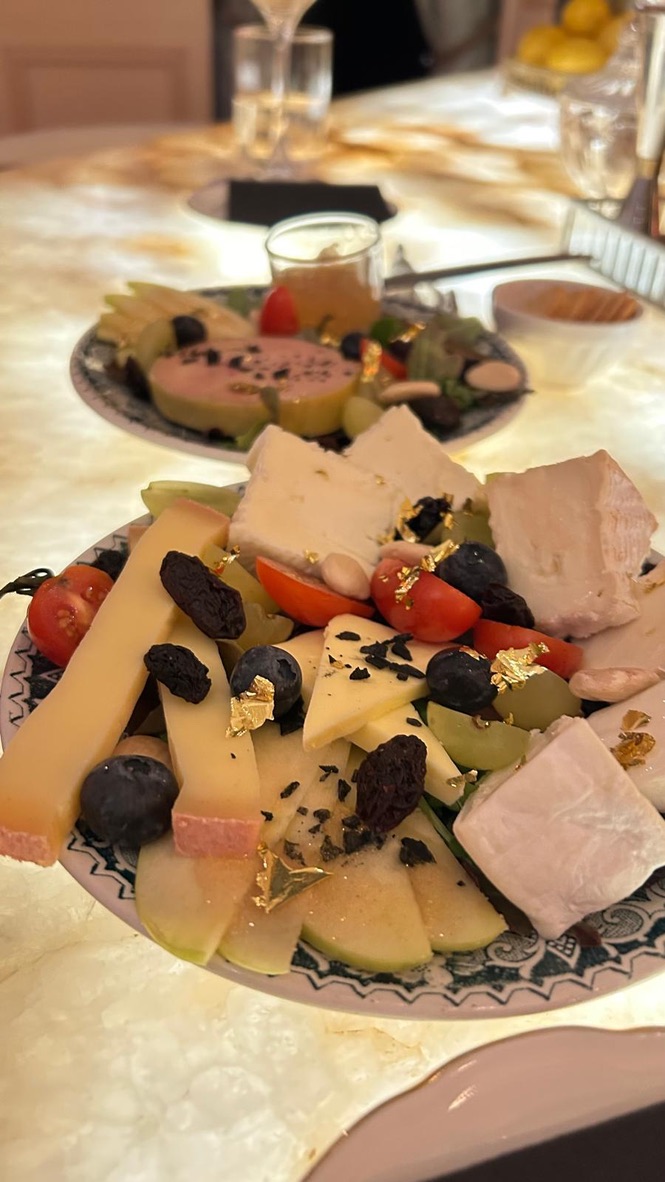
La Fontaine, Málaga — where the tea taught me wine
Then Portugal, and a different air entirely.
As a Black woman, the shift is in the body before it is in the mind. Here there are all kinds of people — the kind of diversity I remember from New York — and with it, an exhale. The particular exhale of no longer moving under a low-grade pressure you had stopped noticing only because it never lifted. Here my heart can be more open. I can breathe easier. There is less expectation of what shape I am supposed to take, less of the quiet arithmetic of how much space I am allowed.
In Ericeira there was generosity from nearly everyone. The exceptions were the one or two who clocked me as American and decided, on that basis, that I should pay more. I am coming to understand something about this, though I hold it loosely, because the nuance could shift and I would rather be corrected than certain: young men here seem to carry a different expectation of older women — a looking-for-mothering, some form of it. And if you are American, the logic runs, then you should pay for everything you have and everything they want, too.
What undid that logic, one evening, was a table of older gentlemen. There was a small teaching going on, directed at the young man serving me — and what they told him was, no. We are the two men at the table. She does not pay for us. We pay for her. His dissatisfaction with that instruction had, I think, less to do with money than with the sense that an American — and a woman — was somehow undeserving of being cared for.
I am not arguing that men should carry every burden. But there are still forms of sexism in which I pay far more, simply to show up in a space, than a man will ever have to think about — and in some strange accounting, that becomes one of the equalizers. I hold that loosely too. I don't fully see the value in the way I am held, arriving as a Black person from the States into a Western European country, and I don't know how the equalizing is supposed to work, least of all in rooms full of white folks, inside the constant negotiation over power and who we take one another to be.
"I felt wanted. Desired to be there. Whether in agreement or disagreement, I would be part of the community."
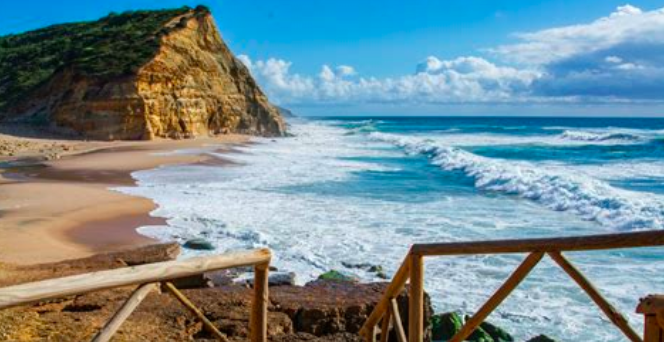
And still — Ericeira gave me the water, and it gave me the sense of being wanted. Of being desired to be there. That, whether in agreement or disagreement, I would be part of the community. And that, beyond nearly anything else, is worth more than a pound of anything.
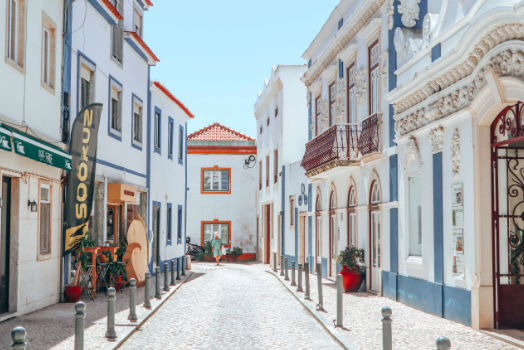
The narrow cobblestone streets. The white houses trimmed in yellow — yellow door frames, some in blue. The multilingual ease, the easy laughter, the cool nights. The little one-bedroom house I am renting, with no bathtub, which I had wanted, but a beautiful shower instead, and a property tended with real care. All of it, fantastic.
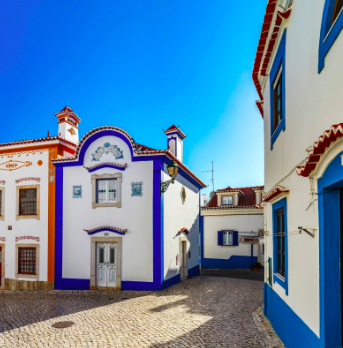
The centre — white houses, blue door frames
I am looking forward to wandering this little coastal place. To time with my friends.
To getting back to centre — in the lineage of big magic, spirit, art, beauty, and practice.